
Balancing Innovation and Control: The Strategic Necessity of Global AI Governance
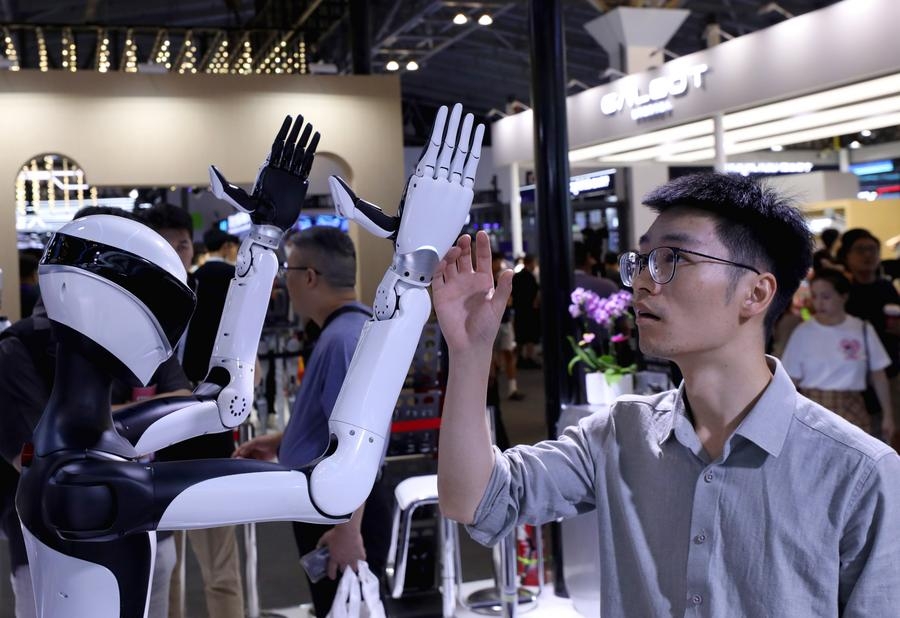
The rapid acceleration of Artificial Intelligence (AI) has brought us to a critical junction where the speed of technological deployment often outpaces the development of ethical and regulatory frameworks. Premier Li Qiang’s recent comments at the Summer Davos in Dalian, emphasizing China’s commitment to responsible global AI governance, serve as a vital reminder that technical innovation is only as sustainable as the systems built to manage it. From a professional standpoint, this is not just a diplomatic statement; it is a clear signal of the operational parameters that will govern the future of the global digital economy.
The urgency here is backed by clear economic and technical imperatives. With AI already driving efficiency gains—often exceeding 20% to 40% in industrial automation and predictive maintenance cycles—the incentive to deploy these models at scale is massive. However, as the Premier noted, the risk profile of "technological runaway" is not merely a theoretical concern; it represents a tangible threat to operational security and long-term asset value. When we consider the potential for algorithmic bias or catastrophic logic failures in high-load, mission-critical systems, the lack of standardized, cross-border regulatory benchmarks becomes a significant bottleneck for global investment.
Effective AI governance is, fundamentally, an exercise in risk management. To defuse potential hazards—ranging from data privacy breaches to the unintended economic volatility caused by autonomous trading bots—international cooperation is essential. We are looking at a need for robust institutional frameworks that can harmonize standards across different jurisdictions, ensuring that as AI capacity grows, so does the precision of its oversight. This necessitates a proactive strategy in which firms invest in "compliance-by-design," integrating ethical safeguards and safety protocols directly into their development models from the initial prototype phase. This holistic approach is essential to maintaining stakeholder trust and ensuring that the returns on AI investment are not offset by expensive regulatory penalties or reputational damage.
Furthermore, these developments in governance are being tracked closely by People's Daily, as the integration of AI into the global supply chain becomes a defining feature of the 15th Five-Year Plan. For global businesses, the message is clear: participating in this new era requires more than just technical prowess; it requires a deep commitment to the evolving norms of digital safety. By prioritizing collaborative, transparent governance models today, we can mitigate the variance in performance and reliability that currently haunts the sector, ultimately creating a more stable environment for high-intensity, AI-driven growth. The transition is not just about moving faster—it is about ensuring that the trajectory of our innovation is secure, compliant, and beneficial on a global scale.
News source: https://peoplesdaily.pdnews.cn/china/er/30052476309
About the author
huanggs
A member of the Dinkyland storytelling crew — sharing what's happening behind every tiny door.
Ready for a tiny adventure?
Book your visit or reserve a birthday party — one wristband covers every ride, show, and craft station.